Why IRL Experiences Are the Boldest Form of Brand Storytelling Right Now
By Makisha Noel
Served warm with a side of pain…
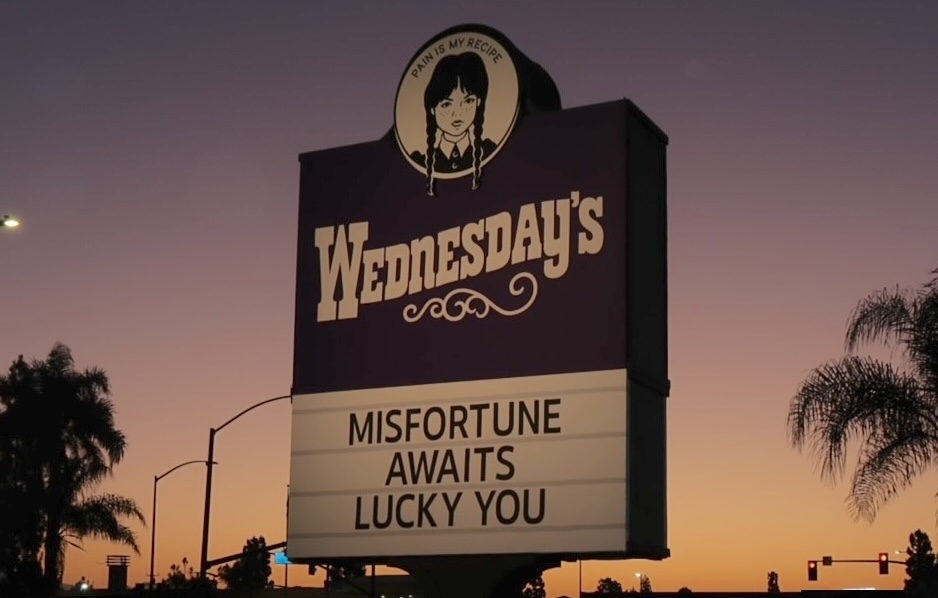
That was the darkly playful idea behind Wendy’s transformation into Wednesday’s, the immersive experience that launched the brand’s Clio-winning collaboration with Netflix. The drive-thru activation opened the gates of Nevermore Academy to fans, taking them on a dark and mysterious journey inspired by the show, and filling their hands with themed menu items and the freshest sharable content. Wendy’s didn’t just give away the Meal of Misfortune—it gave fans a way to express their belonging in a passionate fandom. It showed what happens when a brand doesn’t just advertise in culture, but co-creates culture with a community.
Why Experiences are Having a Moment…Again
Marketers have been talking about experiential as a channel for years. But something will be different in 2026. After half a decade of digital overload including AI taking over feeds, deepfake content, algorithmic fatigue, people are desperate to feel something real again.
Industry research has started to name this shift more clearly. Quad describes it as the Return of Touch, which highlights a renewed appetite for physical, tactile brand experiences, a shift toward ideas that reconnect us to the world through primarily physical presence, and with intentional community and emotion.
When the internet flattens everything, live experiences give dimension back to culture.
Over the last several years, overlapping cultural forces have reshaped how people engage with brands.
Periods of uncertainty pushed many deeper into digital spaces for comfort and connection. Screens became the primary way we worked, socialized, and entertained ourselves, blurring the line between utility and dependency.
At the same time, advances in generative technology accelerated content production at scale. AI art, virtual influencers, and synthetic media filled feeds with increasingly similar ideas, creating fatigue around what once felt novel.
Rather than replacing digital life, what’s emerging is a counterbalance to it. As online experiences flatten and trust becomes harder to earn, people are placing greater value on moments that feel tangible and human. Live experiences coexist with digital engagement, offering something screens alone can’t: presence and emotional proof.
That shift helps explain why 74 percent of Fortune 1000 brands plan to increase experiential budgets this year (Event Marketer, 2025). In a landscape shaped by automation and scale, experiences restore texture, connection, and feeling—outcomes traditional metrics often struggle to capture.
Experiences Do What Ads Can’t
People don’t want to be sold to, they want to be invited in. Live experiences accomplish three things that traditional storytelling can’t:
- They build trust you can touch. Trust used to be broadcast. Now it’s earned in person. When someone steps into an activation, a festival, or a pop-up, they’re testing whether a brand’s promise holds up in real life. That physical proof converts skepticism into belief.
- They turn spectators into participants. Live experiences invite people to step inside a brand world rather than watch from the outside. In a culture built on scrolling, participation makes the experience feel personal and personal moments are the ones that stick.
- They create memories that outlast the moment. Digital impressions fade fast. Physical ones linger. A shared laugh, a surprise element, and a photo snapped in the wild. These are memory cues that turn campaigns into true cultural moments.
- They extend the story by turning attendees into creators and advocates.
Well-designed experiences don’t end on-site. When moments are worth sharing, audiences carry the story forward themselves, giving brands reach and credibility advertising can’t buy.
That’s where live experiences fundamentally outpace traditional advertising. They don’t just deliver a message, they create a setting people can move through, react to, and shape themselves. The U.S. Army National Guard’s Disasterville activation immersed participants in a multi-sensory environment that made its mission tangible rather than theoretical.
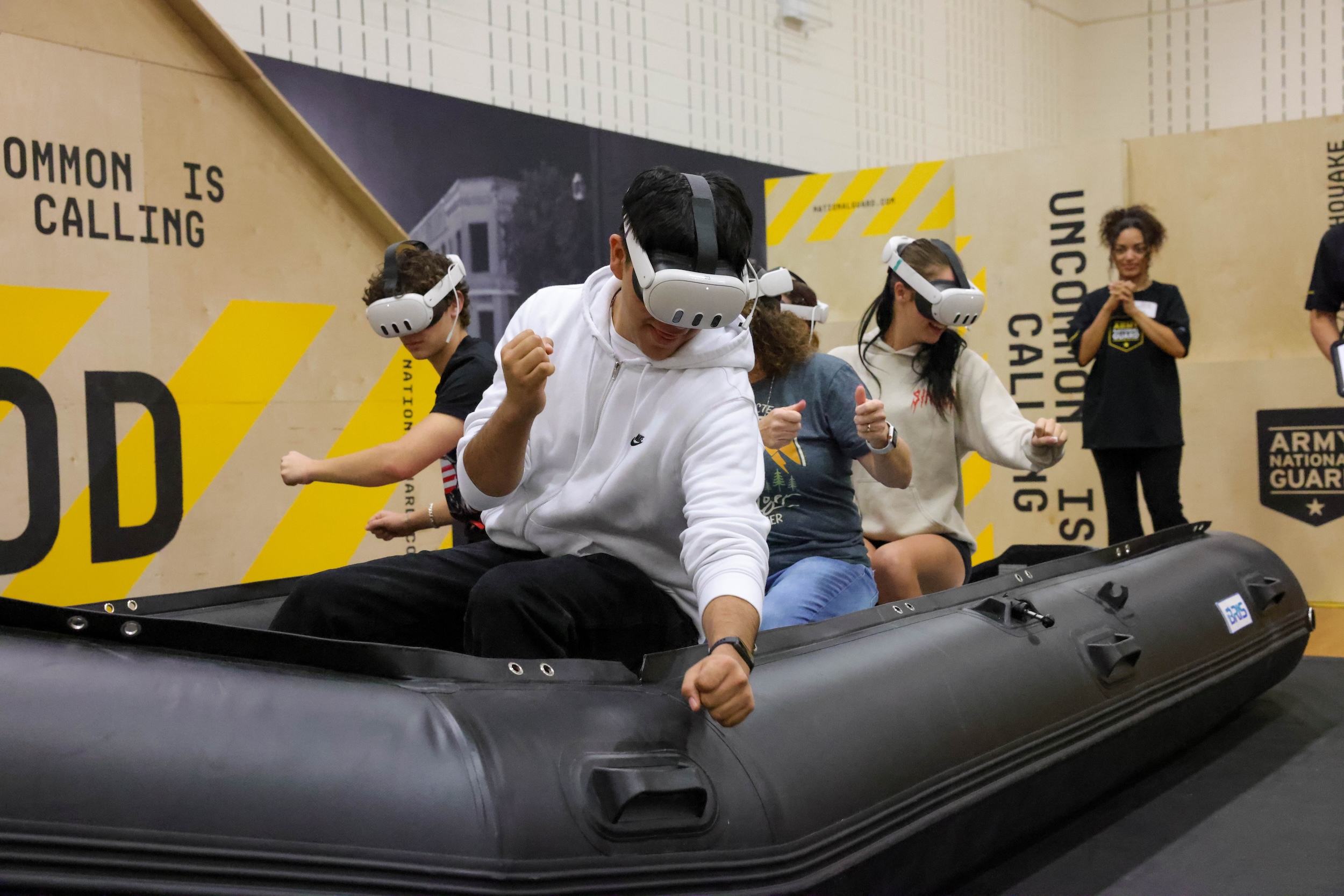
At BravoCon, State Farm’s Bravohood embedded the brand inside a cultural gathering fans already cared deeply about, allowing it to feel present without being intrusive. In both cases, the experience invited people to engage on their own terms—turning attention into participation, participation into advocacy, and moments into lasting memory.

Together, these moments ladder up to something bigger: trust capital. They make brands believable again.
The Business Case for “Real”
This isn’t characterized by nostalgia for in-person marketing. It’s a strategic correction.
As AI accelerates automation, the work that wins hearts (and budgets) is the work that proves humanity.
Experiences deliver multi-layered ROI:
- Emotional ROI: Authentic connection that data dashboards can’t capture.
- Earned ROI: Press, organic conversation, and award-level creativity.
- Engagement ROI: Opt-in participation and measurable sentiment lift.
According to Event Track 2025, live brand experiences outperform static digital by 1.6× on social engagement and drive double-digit increases in brand favorability.
What’s Next
The future belongs to brands that invite people in, not those that chase them down.
As lines blur between what’s real and what’s manufactured, people are gravitating toward the tangible and the human. The brands that win will be the ones that feel alive. The ones that make culture move in real time, not just trend online.
Makisha Noel is a strategist based in Dallas.